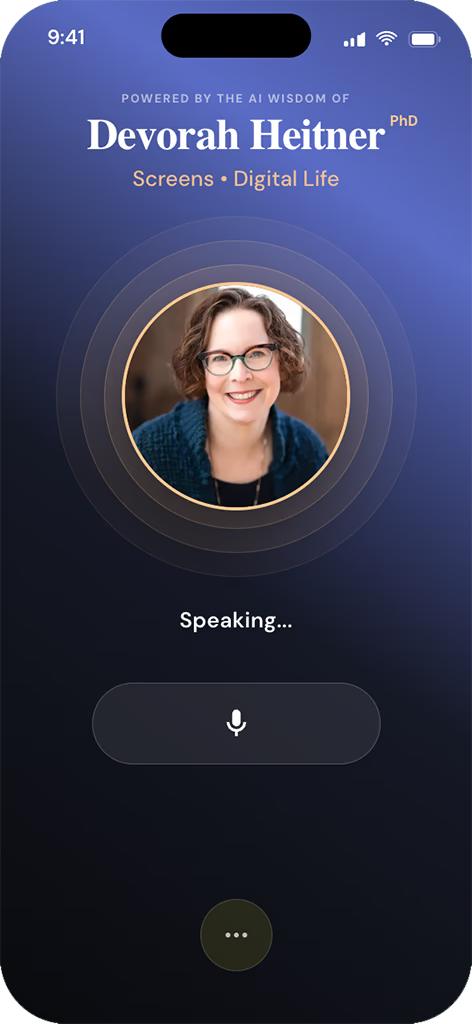

The question isn’t really whether to monitor: it’s how to do it in a way that keeps your child safe without destroying the trust you’re going to need when things actually go wrong. Devorah Heitner’s research on digital family dynamics keeps arriving at the same finding, covert surveillance tends to fail because when children discover it, and they usually do: the relationship damage makes future oversight harder, not easier.
Transparent monitoring, with clear agreements about what you’re looking at and why, is both more ethical and more effective.
As children grow, they begin to navigate their social worlds more independently, and this extends into their digital interactions. Developmentally, pre-teens and teens are in a stage where they crave autonomy and privacy as they build their identities. This quest for independence can sometimes conflict with parental concerns about online safety.
According to Devorah Heitner's research, kids often feel monitored rather than mentored when their digital lives are heavily scrutinized. They need guidance to develop digital literacy and resilience, not just rules. Encouraging open conversations about online experiences rather than invasive monitoring can foster trust and teach them responsible online behavior.
The right level of oversight changes with age. A 10-year-old with their first device needs close, explicit guidance: what the platforms are, who can see what, what to do when something feels wrong. A 12-year-old needs a framework more than a rule: the ‘would I be okay if [someone whose opinion really matters] saw this?’ test.
A 15-year-old needs a relationship where they’ll actually tell you when something goes wrong, which requires a track record of not overreacting to smaller things.
- Encourage Open Dialogue: "I trust you, and I want to understand more about what you enjoy online. Can you show me your favorite apps?"
Fallback Plan: If your child is reluctant, consider sharing your own positive online experiences to build rapport.
- Set Mutual Boundaries: "Let's agree on some rules for digital use that respect both our needs for privacy and safety."
Fallback Plan: If your child resists, emphasize the importance of mutual respect and collaboration in setting these rules.
- Model Transparency: "I sometimes worry about the things you might see online, and I want to be here to talk if anything uncomfortable comes up."
Fallback Plan: If your child shuts down, reassure them of your support without judgment, emphasizing it's okay to make mistakes.
Avoid saying, "I'm just checking your device because I don't trust you." This can undermine your child's sense of autonomy and trust, leading to secretive behavior rather than open communication.
Refrain from using, "You're too young to understand online risks." This dismisses their growing capacity for critical thinking and might prevent them from coming to you with concerns.
The anxiety that drives you to check their phone in the middle of the night is real. But anxiety-driven monitoring tends to surface things that are alarming out of context, and then you’re responding to your interpretation, not the actual situation. Before you look: what specifically are you worried about? Naming the actual concern makes you a better investigator, and often reveals that the conversation you need to have is simpler than the scenario you’ve been imagining.
The baseline guidance above is useful on its own. The details below can change where it makes sense to start, how much support to add, or when to involve someone else.
- How old is your child, and what developmental stage are they in?
- Which device, app, game, or online situation is creating the most friction?
- What is being displaced, such as sleep, schoolwork, movement, or family time?
- What limits or agreements are already in place, and where do they break down?
- How does your child respond when you raise the issue or end access?
Devorah’s research is consistent here, kids who overshare tend to be kids who don’t have a mental model for ‘audience’ yet, they’re thinking about one person they’re sending something to, not the full chain of who might eventually see it. The most useful thing isn’t a rule; it’s a concept. Something like: ‘Before you post or send, ask yourself if you’d be okay if [a teacher, a future employer, someone whose opinion really matters to you] saw it.’ That’s the Devorah framing: digital citizenship as a skill to build, not a restriction to impose.
On the monitoring question: at 12, transparent monitoring works and covert monitoring backfires. Tell him directly, ‘I’m going to check your phone occasionally, not because I don’t trust you, but because that’s part of my job while you’re still learning how this works. You’ll always know I might.’ That turns it from surveillance into accountability with dignity.
Frequently Asked Questions
Focus on mentorship over surveillance. Engage in open conversations about their digital experiences and set agreed-upon boundaries together.
Respect their boundaries but gently encourage dialogue by showing interest in their digital world. Share your own experiences online to foster mutual understanding.
Discuss the potential risks of oversharing and role-play scenarios where they decide what to share. Emphasize the permanence of digital footprints and encourage questions.