

The erasing is relentless: the same sentence rewritten four times, the art project crumpled and started over, the refusal to turn in anything that isn't exactly right. From the outside it can look like high standards. Up close, you may be watching a child who is very afraid of being wrong.
Perfectionism in children is frequently driven by a deep-seated fear of failure. This fear can lead to an intense need for control over their environment and outcomes. Children may internalize high expectations, whether from themselves or perceived from others, which can create a cycle of anxiety and stress. When children focus on achieving flawlessness, they often miss out on the joy of learning and exploring new things.
Perfectionism is not just about wanting to do well. It's often about avoiding the bad feelings that come with mistakes, which can make it harder to try new things and to bounce back. Seeing that helps you support a healthier relationship with success and failure.
In younger children, perfectionism often shows up around the things they care about most, like handwriting, drawings or reading aloud, and a single erasure can lead to a complete shutdown. Later it moves into schoolwork: the test they won't look at after handing it in, the project they won't start because they can't yet see how to make it good enough.
In the teen years, perfectionism can become invisible to adults because the teen stops trying anything they're not already good at. What looks like low effort can be fear of not being good enough.
- Emphasize Effort Over Outcome: "I love how hard you worked on this! What was the most fun part?"
If your child dismisses this, try sharing a story of your own struggles and learning moments to normalize imperfection.
- Normalize Mistakes: "Everyone gets things wrong while they're learning. What did you figure out from this one?"
If they resist, gently shift focus to a different activity to relieve pressure and revisit the learning moment later.
- Encourage Self-Compassion: "It's okay to be upset. How can we be kind to ourselves right now?"
If they refuse, model self-compassion by speaking aloud how you handle your own mistakes.
"Just try harder next time." This phrase can unintentionally reinforce the pressure to achieve perfection, making the child feel that their current efforts are insufficient.
"It's not that big of a deal." Minimizing their feelings can invalidate their experience, leaving them feeling misunderstood and more anxious.
Parents of perfectionist kids often carry their own complicated relationship with high standards, and without realizing it, the reassurances meant to help ('you're so smart, you'll get it') can reinforce exactly the fear they're trying to dissolve.
When your anxiety about whether your child will loosen up, whether this will hold them back, becomes present in the conversation, you're adding weight to a system that's already at its limit. The first regulation task in these moments belongs to you.
Getting comfortable with small, fixable mistakes helps perfectionistic kids loosen up. The form it takes in your child, doing things over or steering clear of anything hard, changes what to practice first.
- Is your child redoing work until it feels perfect, avoiding things they might not be good at, or both?
- Has your child had much practice making a mistake and fixing it themselves?
- How do the adults at home talk about their own mistakes in front of your child?
- Is there something your child loves doing where mistakes don't seem to bother them?
- After a mistake, how does your child usually recover, and what helps them settle?
Talk it through with Ned Johnson's guidance
Bring the last time a small mistake turned into a big moment. The conversation can cover what to say in the moment, what to try over the coming weeks and what to do if reassurance only makes it worse, drawing on Ned Johnson's authorized content.
- “My 8-year-old rips up her drawing if one line is wrong. What should I do first?”
- “I keep telling my son his work is great and he just redoes it anyway. What now?”
- “My 12-year-old won't hand in his essay because it's 'not good enough yet'. Do I make him submit it?”
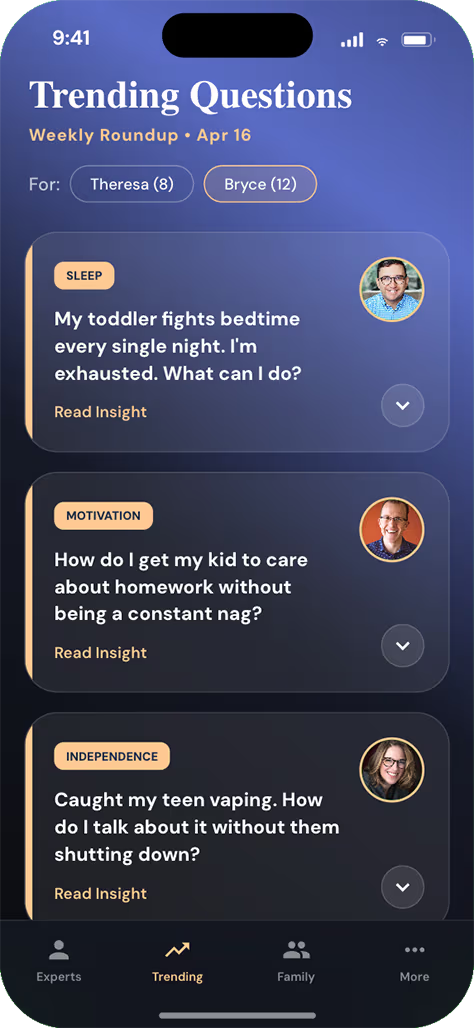


What if your child gets upset when you praise their work?
Try HumanUp free on iPhone or iPad. No credit card required.
HumanUp is currently available on iPhone and iPad. Join the Android waitlist for updates.
🔒 Your conversations are never read by a person · Built on trusted expert guidanceFrequently Asked Questions
Praise effort and process rather than results. Share examples of your own learning from mistakes to normalize these experiences.
Start with low-stakes activities that are fun and stress-free to build confidence. Gradually introduce new challenges with your support and encouragement.