
The kid who couldn't sleep the night before a game now seems indifferent about whether the game even happens. The sport that was their whole identity last year barely registers on their face. You're watching motivation drain in real time, and the scariest part isn't the lack of enthusiasm: it's that you can't tell whether you're watching burnout, a rough stretch, or something else entirely.
Sports burnout in children is often rooted in the clash between their developmental needs and external pressures. At a young age, children are still developing their sense of self and autonomy. When they are pushed too hard or feel their worth is tied to performance, it can lead to a disconnect between their love for the sport and their desire to fulfill expectations.
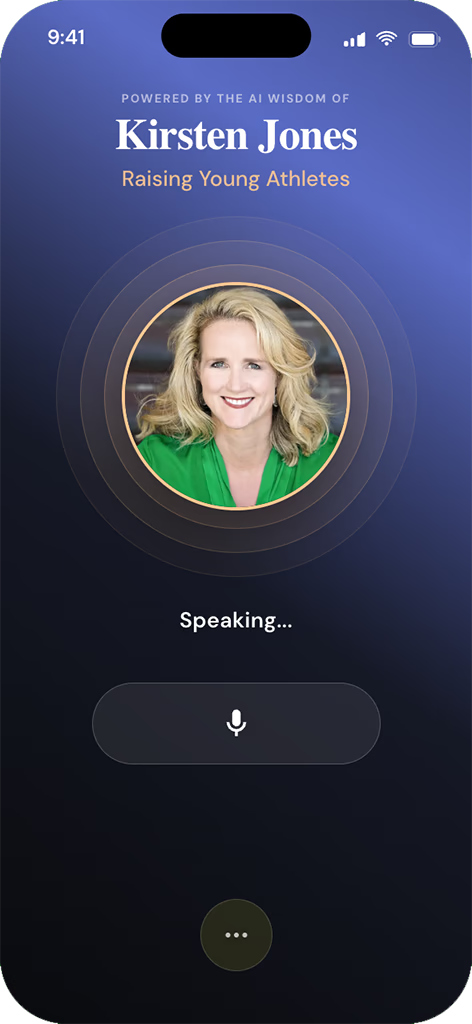
According to Kirsten Jones' philosophies, it's crucial to recognize that children have varying capacities for stress and competition. Over-scheduling and the demand for perfection can overwhelm their developing nervous systems, leading to exhaustion and disinterest. By understanding their unique thresholds for stress and competition, you can help them navigate these pressures while maintaining their enthusiasm for sports.
At 7–9, what looks like burnout is often overscheduling: too many practices, too little unstructured play, a calendar built entirely by adults for adult reasons. Between 10 and 13, burnout tends to set in when early specialization has compressed everything into one lane: same sport, same team, same social circle, year-round with no off-switch.
By the high school years, burnout frequently goes invisible: teenagers have learned to perform engagement well enough that parents don't see the light go out until it's already been dark for a while.
- Empathy First: "I've noticed you seem tired after practice. How are you feeling about your sport lately?"
Fallback Plan: If they shrug it off, try, "It's okay if you're unsure right now. I'm here to listen whenever you want to talk about it."
- Encourage Autonomy: "What part of your sport do you enjoy the most, and what could we do to make it more fun for you?"
Fallback Plan: If they can't pinpoint anything, suggest exploring new aspects together, like trying a different role or position.
- Reframe Success: "What do you think would make you feel successful in your sport?"
Fallback Plan: If they focus on results, guide them towards valuing effort and growth over winning.
Avoid saying, "You can't quit. We've invested so much in this." This statement can make them feel trapped and guilty, furthering their burnout. Instead, focus on their feelings and desires.
Refrain from using, "Just push through it; everyone gets tired." This invalidates their experience and may lead them to suppress their genuine feelings, increasing stress.
Burnout accelerates when the sport becomes the solution to everything: social life, self-esteem, parental attention, and after-school structure all running through the same channel. When any one of those things wobbles, the sport feels like the problem even when it isn't the source.
The pattern that looks like motivation loss but is actually identity collapse: the child stops talking about the sport between practices, stops watching it, stops connecting with teammates off the field.
The concrete protocol: before adjusting training load, run a controllables audit, ask your child separately about their Effort, Attitude, and Focus in their sport over the past month. The answers tell you whether you're looking at overload, under-engagement, or something worth a longer conversation.
The baseline guidance above is useful on its own. The details below can change where it makes sense to start, how much support to add, or when to involve someone else.
- How old is your child, and what developmental stage are they in?
- What happens before, during, and after practices or competitions?
- Is the pressure coming mostly from your child, coaches, teammates, or family expectations?
- Has enjoyment, sleep, mood, school performance, or physical health changed?
- What does your child say they want from the sport right now?
Frequently Asked Questions
Common signs include a sudden loss of interest, feeling exhausted, irritability related to sports activities, and declining performance despite effort.
Approach the conversation with empathy and openness, asking about their feelings and experiences without judgment. Encourage them to express what they enjoy or dislike.
It's important to prioritize their well-being. Discuss alternatives like taking a break or trying a different sport, allowing them to have a say in the decision.