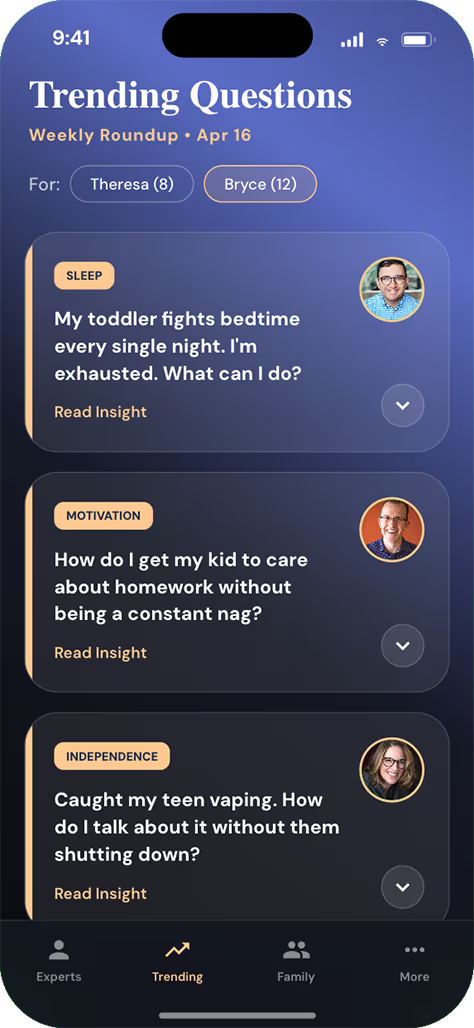

You've been thinking about this conversation for weeks. You've rehearsed the opening, picked the right moment, and every time you try, your teenager shuts down, deflects, or gives you the look that means she stopped listening three sentences in. The fear of saying the wrong thing and making it worse isn't paranoid, but the answer isn't to keep waiting for a better moment that isn't coming.
Teenagers are at a unique developmental stage where their brains are rapidly evolving, especially the prefrontal cortex, responsible for decision-making and impulse control. This means that they are naturally inclined to experiment and take risks, often without fully understanding the consequences. Vaping and alcohol can be particularly alluring due to peer influence and the perception of these activities as trendy or rebellious.
Jessica Lahey's work emphasizes the importance of nurturing autonomy and competence in teenagers. Encouraging them to understand the science behind substance use, and empowering them to make informed decisions, can significantly impact their choices. By fostering an environment where teens feel safe to discuss their curiosities and concerns, parents can play a pivotal role in guiding them towards healthier behaviors.
At 11 and 12, the conversation is mostly about exposure: what they're seeing at school, what they've already heard, what they're curious about, and these are the years when factual information lands cleanest, before peer pressure makes the topic feel loaded to discuss with a parent.
By 14 and 15, the conversation becomes more urgent because alcohol and vaping are no longer hypothetical for most kids this age, and the goal shifts from prevention to risk reduction and judgment-building. By 16 and 17, the most important thing isn't the conversation you're initiating: it's whether they still think of you as someone they could call if something went wrong.
- Ask Open-Ended Questions: "What have you heard about vaping and alcohol from your friends?"
If they shut down, reassure them that you're just curious about their perspective, not judging.
- Share Facts, Not Fear: "Did you know that vaping can affect your lungs more than you might think?"
If they dismiss it, suggest looking up the information together for a more interactive discussion.
- Connect to Their Goals: "How do you think vaping or drinking might affect your sports performance?"
If they seem uninterested, relate it to another area of their life they care deeply about.
"If I ever catch you vaping, you're grounded!" This approach can lead to secrecy and rebellion, as it may make your teen feel controlled rather than understood.
"I know you would never vape or drink." Such statements can pressure teens into hiding their actions to maintain your perception of them, closing doors for honest dialogue.
The conversation about vaping and alcohol escalates fastest when it opens as a lecture rather than a question, because teenagers immediately sense the difference between a parent who wants to understand what they already know and a parent who's arrived with a script. Once your teenager detects that you've already decided what you think and what they should think, the conversation closes.
The protocol that keeps it open is to start with what they know, not what you want them to know: 'What's the vaping situation like at your school?' gets you real intelligence; 'Vaping destroys your lungs and I need you to promise me you'll never try it' guarantees you'll be having the same conversation again next year, with less access than you have right now.
The baseline guidance above is useful on its own. The details below can change where it makes sense to start, how much support to add, or when to involve someone else.
- How old is your child, and what developmental stage are they in?
- Is this a one-time incident or part of a larger pattern?
- What level of trust and communication do you have with your teen right now?
- What are the real safety stakes, versus the parts that are mainly about independence or values?
- What have you said or done already, and how did your teen respond?
Frequently Asked Questions
It's important to be patient and let them know you're available when they're ready. Try revisiting the topic at a neutral, less pressured time.
Show genuine interest in their thoughts and experiences, and avoid being judgmental or punitive. This can help build trust and openness.
Approach the situation calmly without accusing them. Use it as an opportunity to discuss their choices and the potential impacts on their health.