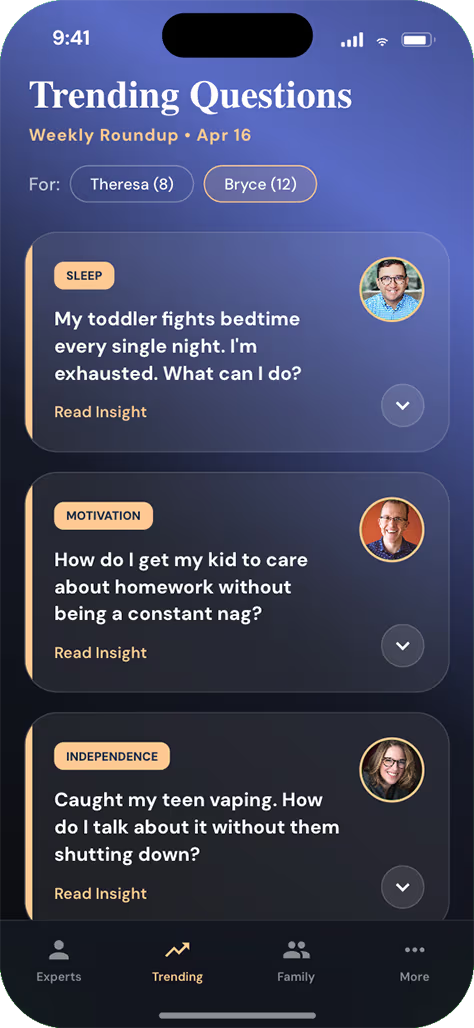

Homework wasn't always like this. There was a point where you sat down together and it was fine: maybe even connected. Now it's a standoff every single evening, and the subject doesn't even matter anymore. The meltdown would happen over anything on the agenda.
Homework resistance often stems from a child's perception of stress and a lack of autonomy. According to Ned Johnson's frameworks, children thrive when they feel in control and competent. When homework feels like a mountain of stress, it can trigger a fight-or-flight response. This stress response can make even the simplest tasks feel insurmountable to your child.
Additionally, children are still developing their executive function skills, which involve organizing tasks, managing time, and regulating emotions. These skills are crucial for tackling homework but are often underdeveloped in younger children, leading to frustration and avoidance. By acknowledging these developmental challenges, parents can adjust their approach and provide the right support.
For 6 and 7-year-olds, homework battles are often a depletion problem: they've held it together all day at school and have nothing left by late afternoon, and any demand tips them over. By 9 and 10, the battles become more about control: the child has been told what to do all day, and homework is the one domain where they push back on the nearest available authority figure: you.
By middle school, the issue often shifts to perfectionism or shame: a child who's behind, doesn't understand the material, or is afraid of being wrong will avoid starting rather than risk being seen struggling.
- Offer a Choice: "Do you want to start with math or reading tonight?"
If your child refuses either option, suggest a short break to reset and then revisit the decision together.
- Empathize with Feelings: "I know this looks like a lot right now. How can I help you feel more confident?"
If this doesn't work, try breaking the homework into smaller, manageable chunks with mini-celebrations for each completed task.
- Encourage Ownership: "What’s your plan for tackling this assignment?"
If the plan isn't forthcoming, sit down together and brainstorm some strategies, emphasizing their input and control.
Avoid saying "Just get it done, and then you can play." This can make homework feel like an obstacle to freedom rather than a task of value, increasing resistance.
Refrain from using "Why can’t you just focus?" as it can feel like criticism, escalating stress and shutting down communication. Instead, aim to understand the root of their distraction.
Your worry about your child falling behind, or about what the teacher will think when the work comes in incomplete, can transform you from available parent into enforcer, without you noticing the shift. When you make it your job to make sure the homework gets done, you take the ownership away from your child, and the battle begins. The hardest realization for most parents is that stepping back isn't giving up: it's the actual intervention.
The baseline guidance above is useful on its own. The details below can change where it makes sense to start, how much support to add, or when to involve someone else.
- How old is your child, and what developmental stage are they in?
- Does this happen at home, at school, or across settings?
- Is the hard part remembering, getting started, staying focused, or finishing?
- What supports are already in place, and which ones actually help?
- Are ADHD, sleep, anxiety, learning differences, or a recent change part of the picture?
Frequently Asked Questions
Procrastination often occurs due to fear of failure or feeling overwhelmed. Providing support and creating a structured plan can help alleviate these feelings.
Focus on autonomy and competence by offering choices and encouraging them to set their own goals. This approach can foster intrinsic motivation.
Try to understand the root cause of their refusal, whether it's stress, lack of understanding, or feeling unmotivated. Addressing these issues with empathy can open up pathways to cooperation.