
Kids and AI Chatbots: What Parents Need to Know
"My son told me he asks ChatGPT things he would never ask me. I do not know if that is fine, or something I should be worried about."
The question is not whether your child uses AI. Most already do, for homework, for company, and sometimes for things they are not ready to say out loud to a person. The question is what it is replacing. A chatbot never sleeps, never pushes back, and is built to keep you talking. None of that is true of the people who actually help a child grow. Keep devices out of bedrooms overnight, talk openly about how these tools work and where they fail, and treat fact-checking as a skill you teach.
The appeal is not that it is clever. It is that it is there. A child who wakes at 2am anxious, or who has just watched a group text turn on them, or who feels lonely after everyone else has gone to sleep, has something that answers immediately. It never needs sleep. It never says "can this wait until morning."
That is why the most useful decision most families can make is not about which app, but about where the device sleeps. Keeping phones and laptops out of bedrooms overnight is good for sleep on its own, and it removes the window where a child's first instinct when frightened or upset becomes a chatbot rather than a person down the hall.
What we want kids to build is the reflex to reach for a trusted human. That reflex is practised, and it is practised in the moments that are hardest.
These tools are designed to be engaging. They ask follow-up questions. They remember details. They encourage you to share more. Adults feel the pull of that, and a child whose brain is still developing, who is naturally looking for belonging and validation, has a much harder time noticing that the warmth is one-directional.
The deeper issue is agreement. A good friend, teacher or therapist does not simply tell you that you are right. They help you notice your blind spots and your own part in a conflict. Something that agrees with you every time is not helping you grow, and constant validation can quietly reinforce a bad decision or an unhealthy pattern.
This is worth a real conversation rather than a rule. Questions that tend to open it up:
- Would you actually want a friend who agreed with everything you said?
- Would you respect someone who never challenged your thinking?
- How do good friends help us become better people?
- When has critical feedback helped you do something better?
One exception is not a conversation, it is a line. If a child is bringing a chatbot questions about self-harm, or opening up about depression, that is not a place for a tool built to be agreeable. Safeguards exist and they have not proved sufficient. Kids need to know that real human help exists and how to reach it, including the Crisis Text Line and whatever is available locally.
Parents often assume they are behind because their child picks up a new app in seconds. Speed with an interface is not the same as judgment about it. Touchscreens being intuitive for toddlers has never meant toddlers know anything.
Adults have decades of lived experience. You know what manipulation looks like. You notice when information sounds slightly off. You have navigated conflict, misunderstanding and repair with actual people and survived it. That is the thing worth transmitting.
Practically, this means helping kids build a better detector for nonsense: where did this come from, how would we check it, what would it look like if this were wrong? Teaching a child to fact-check is becoming as fundamental as teaching them to search.
Elementary-aged children should not be independently using open-ended AI. Using these tools well takes mentorship and a lot of relationship experience to draw on, and younger kids have neither yet.
When a child needs to be occupied while you work, a closed environment is the safer choice: a favourite show, an audiobook, a game without unrestricted internet. The risk is not the screen. It is the open door.
Schools are improvising, and most teachers do not feel ahead of this. Detection tools and outright bans only go so far, and detectors regularly flag original work, with real consequences for the student who wrote it. Banning a tool that is already everywhere mostly teaches kids not to tell you about it.
Teens themselves are often more sceptical than adults expect. Many are actively asking for safeguards, labelling and privacy protections. That is something to build on rather than argue with, and it is the reason the conversation works better than the rule.
Questions that tend to go somewhere with an older kid:
- What do you think counts as an ethical use of AI, and what doesn't?
- How are your teachers handling it?
- Have you seen it give you something that was just wrong? How did you catch it?
- Can you tell the difference between your own writing and something it produced?
Blanket positions in either direction tend to fail. Some concrete distinctions worth holding:
- A health question or an injury: a doctor, a physical therapist or a coach. Never a chatbot.
- Schoolwork: the test is whether your child can explain the work and remembers writing it. If not, it is not theirs, and that is the part that matters to teachers and to admissions.
- Something a person or a book does better: a lot of questions have a good human or a good source behind them already.
- College research: possible, with caution. These tools produce confidently wrong information about admissions.
- Well-designed, narrow tools: genuinely promising, especially where they widen access for families who do not have a counsellor to call.
It is also worth naming out loud that these systems consume real resources, and that they can flatten a child's own voice by editing out the details a person would have thought mattered. Both are fair reasons to use them deliberately rather than by default.
Most of what is above is true of children in general. What changes where you would start is the specifics of your child:
- What are they actually using it for? Homework help, company late at night, and curiosity about something they cannot ask you are three different situations with three different responses.
- What happened just before they reached for it? A rough day socially points somewhere very different from boredom.
- How old are they, and how much do they already question what they read?
- What is your household already doing about devices overnight?
- Has anything already gone wrong that you are reacting to, or is this a decision you are making ahead of time?
Those are the questions that turn general guidance into something that fits your family. Start with what tends to work, then bring the actual situation into HumanUp.
Frequently Asked Questions
Not automatically. The useful test is whether your child can explain the work and remembers producing it. If they can, the tool acted like a calculator. If they cannot, it is not their work, and that is exactly what teachers and admissions officers are assessing. Worth saying out loud at home before it becomes an argument about one assignment.
It depends what it is replacing. Thinking out loud to something is not inherently harmful. But these tools are built to agree with you and to keep you talking, and a child looking for belonging can read that warmth as mutual when it is not. If the chatbot has become the first place they go when upset, that is the thing to address, gently. Anything touching self-harm or depression needs a person, not a chatbot.
Elementary-aged children should not be using open-ended AI independently. Using it well takes mentorship and enough relationship experience to notice when something is off, and younger kids have neither yet. If they need to be occupied, a closed environment such as a show, an audiobook or an offline game is a safer choice than an open browser.
Lead with curiosity rather than a rule. Ask what they use it for, what it has got wrong, and whether their teachers have said anything. Teens are often more sceptical about AI than adults assume, and many are actively asking for better safeguards, so there is usually more common ground than the conversation's reputation suggests.
Bans and detection software tend to underperform. Detectors regularly flag original work, which punishes the student who actually wrote it, and banning something already everywhere mostly teaches kids not to mention it to you. Mentoring travels further than monitoring, because it keeps you in the conversation when something does go wrong.
Bring your AI question into HumanUp
Share what is happening, what you have already tried, and the details that matter. HumanUp uses authorized expert content to help you decide where to start, what to say, and what to try next.
- My 11-year-old is asking ChatGPT things instead of asking me. How do I open that up?
- How do I tell whether AI is helping with homework or doing it?
- What do I say when my kid says everyone else is allowed to use it?
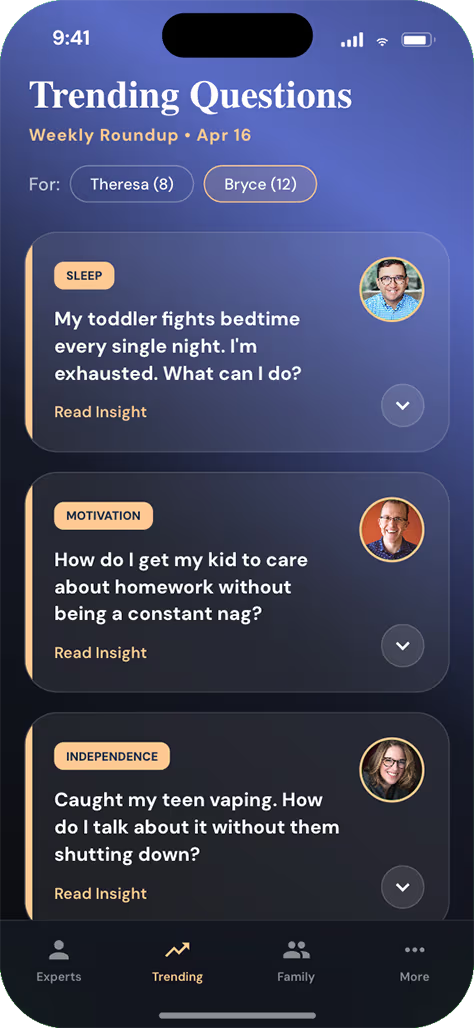
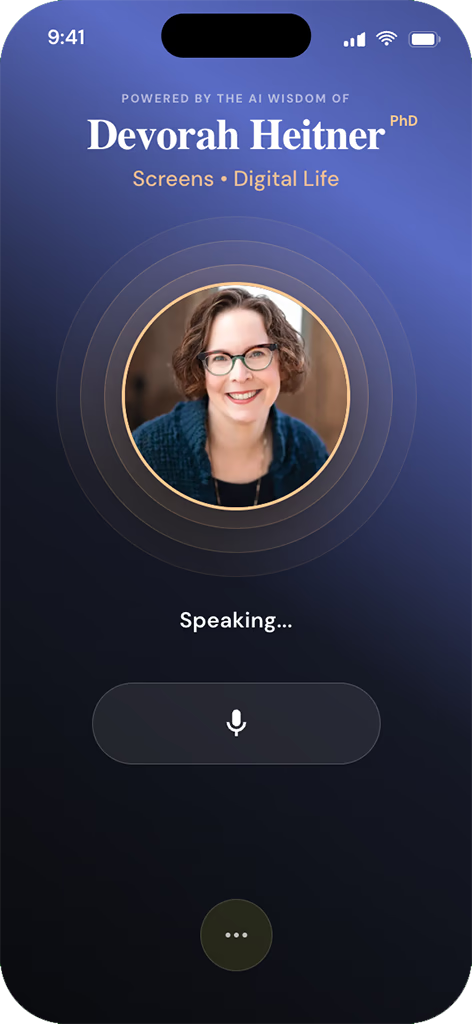
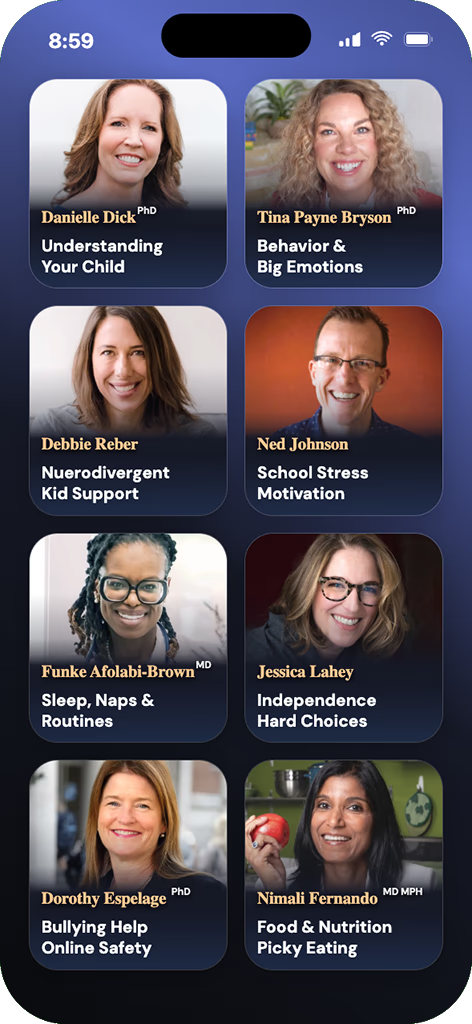
Start with the expert-backed guidance above, then bring in your child's age, the pattern you are seeing, and what has already happened so HumanUp can help you work through the next step.
Try HumanUp Free Download on the App Store 🔒 Your conversations are never read by a person · Built on trusted expert guidanceImportant Educational Notice
In HumanUp, the AI guidance is educational only. It does not provide psychological therapy, clinical diagnosis, or crisis intervention. If you or your child are experiencing a medical emergency, physical violence, or a mental health crisis, please contact emergency services or a qualified healthcare provider immediately.