

You've lost count of the wakings, and morning can't come soon enough. Night after night of broken sleep leaves you in a fog that builds day after day. For many families, the nights weren't always like this. Something changed, or a change you expected never came, and now the waking feels stuck.
Night wakings are a common part of childhood. Big changes in a child's life, or worry about being apart from you, can show up as waking in the night.
Moreover, many children develop sleep associations, such as needing a parent to fall asleep or relying on a specific bedtime routine. When they naturally come to lighter phases of sleep during the night, they may wake up and seek these familiar associations to return to sleep. Understanding these underlying causes is crucial in addressing night wakings effectively.
In the early months, waking at night is expected, and it isn't something to fix.
In toddlers, night waking is often about sleep associations, needing to recreate whatever was there when they fell asleep. In older children, worries, a change in the room overnight, or a nap too close to bedtime can all play a part.
- Reassure and Retreat: "I'm here, you're safe. It's time to sleep."
Fallback Plan: If your child continues to cry, try sitting beside the bed until they fall asleep and moving your chair a little closer to the door every few days.
- Consistent Comfort Object: "Here's your teddy, it will stay with you."
Fallback Plan: If your child resists, involve them in choosing a sleep buddy the next day to increase attachment.
- Visual Sleep Chart: "Look at the chart, it's time for sleep."
Fallback Plan: If this doesn't work, engage your child in creating the chart to foster ownership and understanding.
"Stop crying, there's nothing to be scared of." This phrase dismisses your child's feelings and can increase anxiety, making it harder for them to settle.
"If you don't sleep, you won't get any treats tomorrow." This conditional threat can create stress around sleep and make your child associate bedtime with negative outcomes.
A lot of habitual night waking comes down to sleep associations. If your child fell asleep being nursed, rocked or with you beside them, they often need the same thing to get back to sleep when they surface in the night.
Other things can play a part too: a room that changes after your child falls asleep (you slip out, music stops, a light goes off), being unwell, and in older children, worries that surface once the house is quiet.
That's why the most useful place to start is usually bedtime, not 2am. It's hard to teach anyone anything in the middle of the night. One gentle approach is to sit in a chair beside your child's bed until they fall asleep, then move the chair a little closer to the door every few days. In the meantime, at 2am, do whatever gets everyone back to sleep.
Night wakings often turn into a habit, and small changes at bedtime and overnight can shift it. How your child drifts off, and what happens when they wake, usually reveal which habit to work on.
- At bedtime, does your child fall asleep on their own, or with you nursing, rocking or lying beside them?
- How old is your child, and has the waking always been there or did it start recently?
- Is anything different at 2am from bedtime, like music that stopped or a light that went off?
- Do the adults at home respond to wakings the same way, or does it depend who goes in?
- When your child wakes, do they settle quickly once you're there, or stay awake a long time?
Talk it through with Funke Afolabi-Brown's guidance
Start with the nights you're having now, however many wake-ups there are. Talking it through helps you choose a first step, decide how to respond at 2am and know what to try if the first week is rough, drawing on Funke Afolabi-Brown's authorized content, and you can pick up where you left off as things change.
- “My 18-month-old needs rocking to fall asleep and wakes three times a night wanting to be rocked again. Where do I begin?”
- “We've been walking her back to bed every time and now she's up even more. What should we do instead?”
- “My partner and I handle the 2am wakings differently. Should we pick one way and stick with it?”
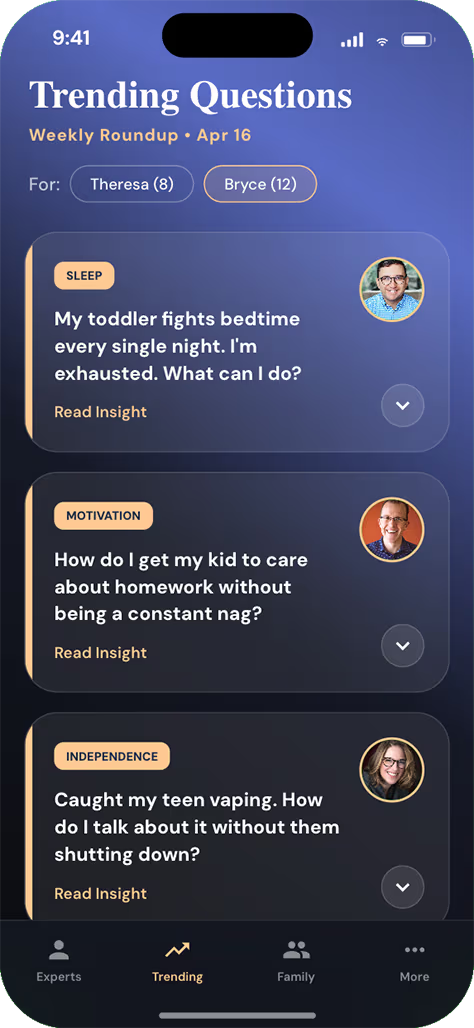


What if a new baby arrives while you're still working on nights?
Try HumanUp free on iPhone or iPad. No credit card required.
HumanUp is currently available on iPhone and iPad. Join the Android waitlist for updates.
🔒 Your conversations are never read by a person · Built on trusted expert guidanceFrequently Asked Questions
Establishing a consistent bedtime routine and ensuring a sleep-conducive environment can help reduce night wakings. For toddlers and older children, a comfort object can help, along with learning to fall asleep on their own. Babies under one should have nothing soft in the crib.
It can be worry about being apart from you, something that changed after they fell asleep, or needing the same help they had at bedtime to drift back off. Looking at how they fall asleep at the start of the night is often the best place to begin.
Waking at night is common in young children. If it's wearing your family down, it's worth working on, and bedtime is usually the place to start. If anything about your child's sleep or health worries you, your pediatrician is the right person to ask.