

You know the list by heart. You've built dinner around it for months, maybe years. You apologize at restaurants before the server finishes reading the menu. And somewhere along the way the list stopped expanding, or maybe it never did, and now you're genuinely wondering whether this is something you should have handled differently or something that's just going to be your life until they're twenty.
Picky eating is common in young children, and many parents of two-year-olds see their child as a picky eater. During this time, children are exploring their independence and may use food as a way to exert control over their environment. This is a normal and expected behavior, as asserting autonomy is a key developmental milestone. Understanding this can help parents approach mealtimes with empathy and patience.
Some children are also more sensitive to how food looks, smells or feels. For them, getting to know a food by touching it, smelling it and talking about it can come before tasting it, which makes new foods less intimidating.
For toddlers, a short food list is common, and food jags (wanting the same foods day after day) are part of how many of them eat.
In the preschool and early school years, steady, low-pressure practice helps many children start to branch out. As kids get older, a short food list can make birthday parties, school lunch and sleepovers hard, and helping your child handle those moments becomes part of the work.
- Offer Choices: "Would you like carrots or peas today?"
If they refuse both, you might say, "It's okay not to choose today. Let's try again tomorrow."
- Describe the Food: "This broccoli is crunchy like your favorite crackers."
If this doesn't work, gently suggest, "You can touch it first to see how it feels."
- Involve Them in Cooking: "Can you help me stir the soup?"
If they decline, reassure them, "You can watch and help when you feel ready."
One common mistake is saying, "You can't leave the table until you eat your vegetables." This can turn mealtime into a power struggle and create negative associations with food. Instead, focus on encouraging exploration without pressure.
Another pitfall is, "If you eat your dinner, you can have dessert." This sets up a reward system that can lead to unhealthy eating patterns. Instead, emphasize the joy of tasting and discovering new foods without attaching rewards.
A short food list tends to stay short when every meal is built only from the foods a child already eats. If new foods never show up, there's nothing to practice. You don't have to change everything at once. Start by putting one new food on the table next to foods your child already eats, with no expectation to eat it. Seeing it again and again is where the practice begins.Keeping new foods next to familiar ones, without pressure, can help a short list grow slowly. Whether the list has budged lately, and how much it limits daily life, guides the next step.
- Over the past few months, has your child's list of foods been growing, or has it stayed about the same?
- Are meals built entirely from foods your child already eats, or do other foods appear alongside them?
- Is the short list making school lunch, parties or sleepovers hard for your child?
- Is a younger sibling starting to copy your child's eating?
- Does your child have a known sensory or developmental difference that affects eating?
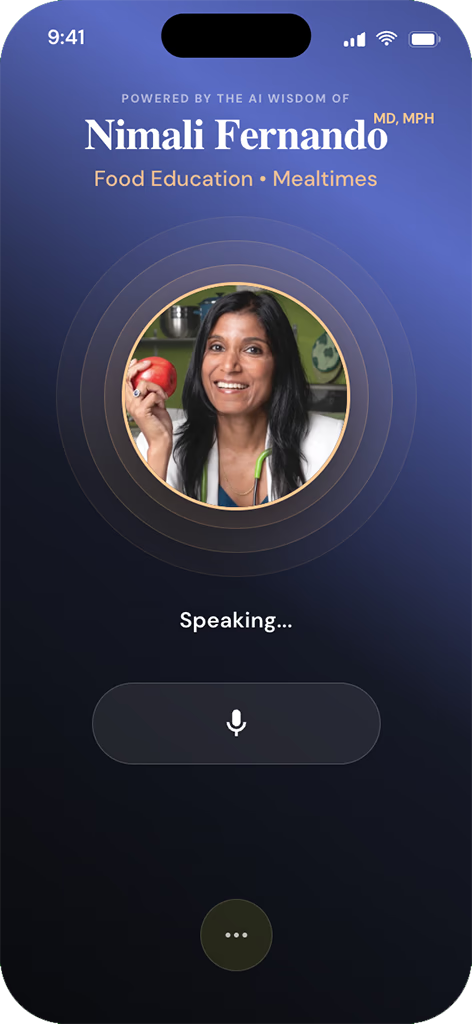
Talk it through with Nimali Fernando's guidance
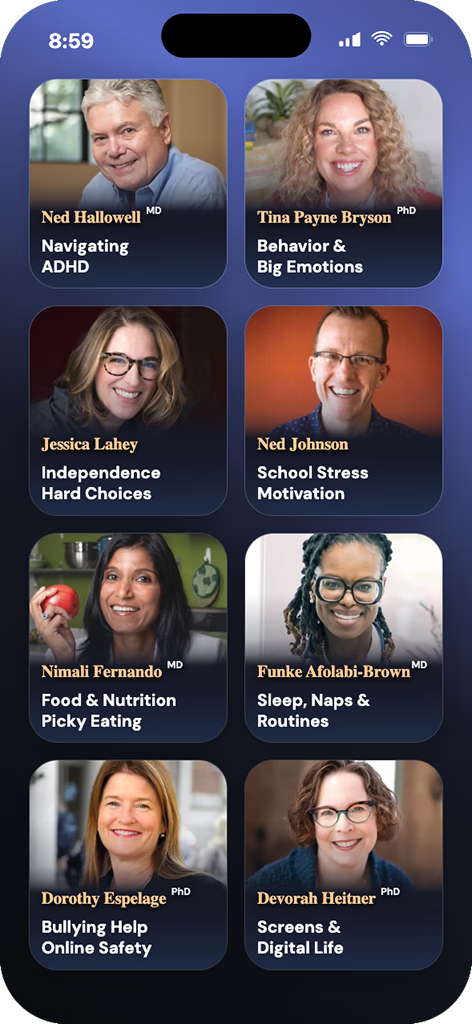
Bring the list of foods as it stands today. Talking it through helps you choose which food to put next to the familiar ones, what to say at the table and how to handle school lunches and parties, drawing on Nimali Fernando's authorized content.
- “My 4-year-old has eaten the same five foods for a year. How do I start adding to the list?”
- “I've put a new food beside his pasta every night for a month and he won't even look at it. Do I keep going?”
- “My 9-year-old is going to a sleepover where they're having pizza, and he won't eat it. What do I tell him?”
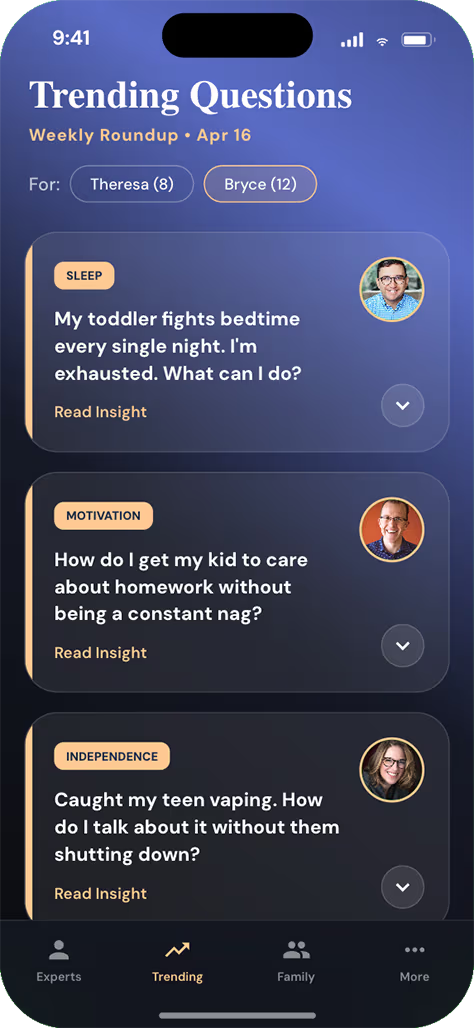
What if a younger sibling starts copying the short list?
Try HumanUp free on iPhone or iPad. No credit card required.
HumanUp is currently available on iPhone and iPad. Join the Android waitlist for updates.
🔒 Your conversations are never read by a person · Built on trusted expert guidanceFrequently Asked Questions
Start by pairing new foods with familiar favorites, and introduce them in small portions. Encourage exploration by allowing your child to touch and smell the food without pressure to eat it immediately.
It varies. Learning to eat takes practice, and some children need many more tries than others. Keep offering new foods calmly and keep meals pleasant.
Adding vegetables to smoothies, sauces or dishes your child already enjoys is fine, as long as some vegetables also stay on the plate where your child can see them. Avoid making mealtime a battleground and focus on creating positive food experiences.