

There's a version of dinner that exists in your head where everyone is seated, someone says something funny, food gets eaten at a reasonable pace. And then there's actual dinner, which involves at least one person under the table, one spill that requires a full pause, two redirections mid-bite, and a general energy level that makes you wonder whether eating together is supposed to feel this hard.
Table behavior is almost never about rudeness. It's about developmental readiness, attention capacity, and a setting built entirely for adults being asked to contain the energy of small people.
Children's table behavior is often a reflection of their developmental stage. At a young age, children are naturally curious and eager to explore their environment, which can manifest as playing with food or refusing to sit still. It can also be about independence and testing limits, not just about food.
For some children, new textures and tastes, or a busy, noisy table, can also feel like a lot. Creating a supportive mealtime environment that respects these developmental needs can help mitigate challenging behaviors. By understanding that a child's resistance at the table might be an expression of their developmental exploration, parents can better tailor their approach.
Toddler meals are short, and a toddler who wants to get down has often simply finished eating. For preschoolers, sitting still is still hard work, and children this age tend to do better with shorter meals and a clear end point.
Older kids can sit for longer, but fidgeting, sibling friction or a screen in the room often cause more of the trouble.
- Give a Job: "Can you be in charge of passing the bread tonight?" Fallback Plan: If they lose interest, give them another small job, like refilling the water cups.
- Set Clear Expectations: "We sit together until the timer goes off, then you can be excused." Fallback Plan: If they get up early, calmly remind them once, and if they're done eating, let the meal be over for them.
- Use Positive Reinforcement: "I love how you're using your spoon so well!"
Fallback Plan: If they lose interest, shift the focus to a fun mealtime game or story to re-engage them.
One common misstep is saying, "If you don't eat, you won't get dessert." This can create a negative association with food and pressure around eating. Instead, focus on the enjoyment of the meal itself without linking it to rewards.
Avoid saying, "Stop playing with your food," as it can discourage exploration and learning. Instead, guide them gently towards appropriate table manners by modeling the behavior you wish to see.
Table behavior tends to get harder when what a child can manage and what the adults expect drift apart. A preschooler who can't stay still through a long dinner isn't being rude. Things escalate when reminders like "sit down, stop playing with your food, use your fork" become most of what gets said at dinner. The table gets less pleasant, the child wants to leave more, and the reminders grow. One thing to try is giving the meal an end your child can see, like a timer or a clear signal, so sitting doesn't feel endless.Shorter meals with a clear finish, and something useful to do, often help a wriggly child. What actually goes wrong at dinner, and what's going on around it, shows which fix to reach for.
- How long do family meals usually last, compared with how long your child can stay seated?
- Is the main problem getting up and wandering, or playing with and throwing food?
- Is there a screen on, or a sibling stirring things up, while you eat?
- How close to dinner does your child usually have their last snack?
- Does your child have a job at meals, like setting the table or pouring water?
Talk it through with Nimali Fernando's guidance
Describe a typical weeknight dinner at your table. You'll get help setting expectations that fit your child's age, finding a few words to use instead of constant corrections and planning for long holiday meals, informed by Nimali Fernando's authorized content.
- “My 3-year-old climbs out of her chair after five minutes. Should I make her stay?”
- “We made him sit until everyone was done and now dinner ends in tears every night. What should we do instead?”
- “My 5-year-old mashes and mixes everything on his plate. What do I say when he starts?”
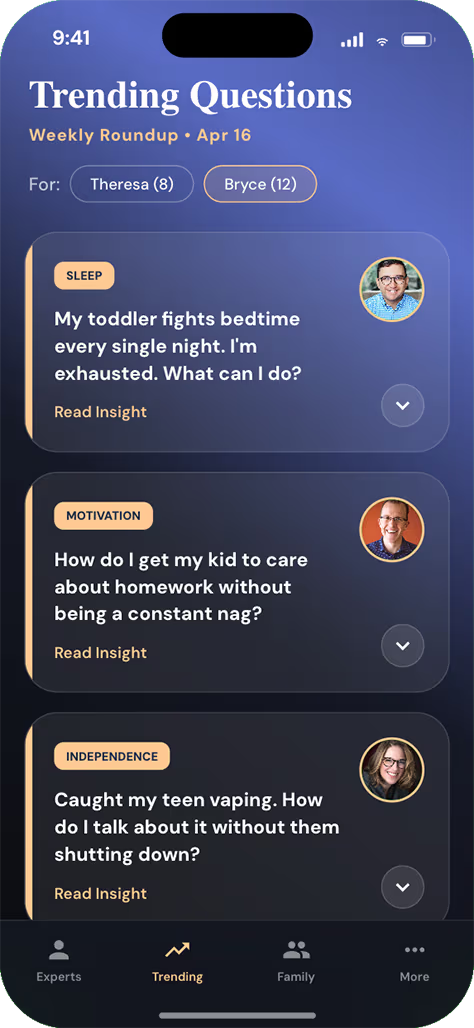


What if the hardest meals are at grandma's, with her rules?
Try HumanUp free on iPhone or iPad. No credit card required.
HumanUp is currently available on iPhone and iPad. Join the Android waitlist for updates.
🔒 Your conversations are never read by a person · Built on trusted expert guidanceFrequently Asked Questions
Incorporate new foods in a fun and non-pressured way, such as food art or taste tests, to pique curiosity without forcing.
Start with short meals and a clear end, give your child a job at the table, and let table time grow slowly as they get older.
Accept that messes are part of learning. Involve your child in cleanup to teach responsibility and reduce your stress.