

The gap between what cooking with kids looks like in your head and what it looks like in your kitchen is one of the small comedy-tragedies of parenting. What closes it is matching the job to what your child's hands can do right now.
A 5-year-old who keeps spilling things isn’t being difficult. They’re doing exactly what their fine motor skills can do right now, in a space that was designed for adults.
Involving children in cooking is more than just a fun activity; it’s an educational opportunity that engages multiple developmental areas. From a young age, children can practice fine motor skills by stirring, pouring, and measuring ingredients. These activities enhance hand-eye coordination and dexterity, vital skills for their overall development.
Cooking also provides a sensory-rich environment where children can explore tastes, textures, and smells, promoting sensory development and curiosity about food. Moreover, it introduces basic math concepts through measuring and counting, as well as language skills as they learn new vocabulary and follow instructions.
Cooking also lets a cautious eater get to know new foods by touching and smelling them, with no pressure to taste.
Knowing what your child is ready for helps a lot. Toddlers can rinse, sort and tear. Preschoolers can pour, stir and knead, and with you right beside them can start chopping soft foods with a kid-safe knife. School-age children can measure, crack eggs and follow simple steps. Older children can make a whole dish, with an adult close by for knives and heat. Some mess comes with every stage. It's a sign your child is learning, not a sign you're doing it wrong.
- Encourage Exploration: "Let's see what happens when we mix these together!"
Fallback Plan: If they lose interest, try asking them to choose an ingredient to add, giving them a sense of control.
- Celebrate Effort, Not Perfection: "Look how well you sprinkled the cheese!"
Fallback Plan: If they get frustrated, emphasize fun over outcome, saying, "Mistakes are part of learning!"
- Make it a Game: "Can you find the red vegetables?"
Fallback Plan: If they become distracted, redirect focus by asking them to help with a different task.
Avoid saying, "Don't make a mess." This phrase can stifle a child's natural curiosity and make them hesitant to participate fully. Instead, embrace the mess as part of the process and focus on clean-up as another learning opportunity.
Refrain from using, "Hurry up, we're running late." This can create anxiety and diminish the joy of cooking. Instead, plan cooking activities when time allows for a relaxed pace, reinforcing the experience as enjoyable rather than rushed.
When Dinner Is Already Running Late
Cooking together when you're already behind is different from cooking on a slow afternoon. On rushed days, you don't have to send them out of the kitchen. Keep a small job ready that is truly theirs and won't slow you down, like setting the table, being in charge of the water or washing the salad. They're still part of the meal, in a way that fits the moment.
Even young children can help in the kitchen with the right job. Picking that job comes down to what their hands can already manage and how much time the evening allows.
- Can your child already pour, stir and crack eggs, or is washing and tearing more their speed?
- Are you mostly cooking on rushed weeknights, or do you have slower time at weekends?
- How comfortable are you with your child using a kid-safe knife or working near the stove?
- Does your child taste things while you cook, or only once the food is on the table?
- When cooking goes off track, does your child lose interest, or get upset when something goes wrong?
Talk it through with Nimali Fernando's guidance
Bring the kitchen you have and the time you've got. Talking it through helps you pick a first job your child can own, what to say when the eggs hit the floor and how to keep going once the novelty wears off, informed by Nimali Fernando's authorized content.
- “My 3-year-old wants to help every night but I only have 20 minutes to get dinner on. What can she actually do?”
- “I let my two kids cook together and it ended in a fight over the spoon. How do I cook with both of them?”
- “My 10-year-old wants to cook a whole dinner by herself. Should I let her?”
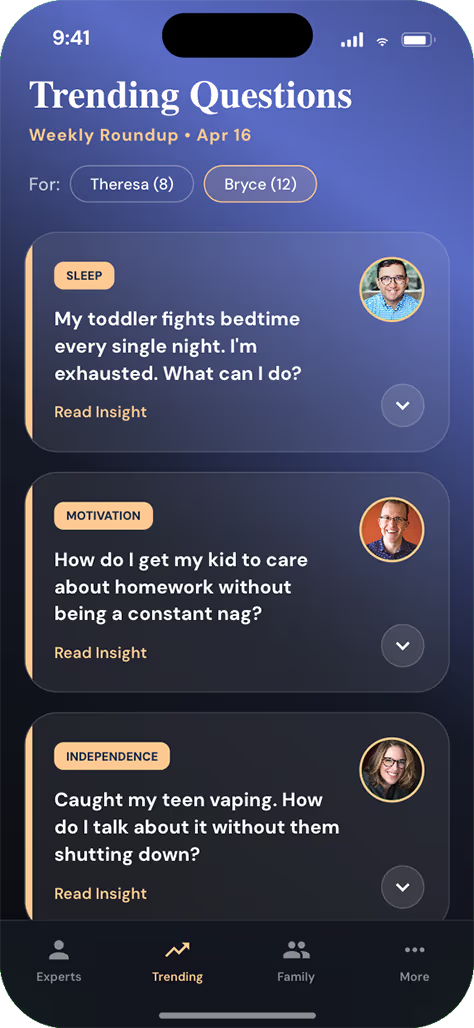


What if you're nervous about knives and heat but your child isn't?
Try HumanUp free on iPhone or iPad. No credit card required.
HumanUp is currently available on iPhone and iPad. Join the Android waitlist for updates.
🔒 Your conversations are never read by a person · Built on trusted expert guidanceFrequently Asked Questions
Offer them tasks that are age-appropriate and involve sensory exploration, such as washing vegetables or stirring batter.
Simple recipes like fruit salad, mini pizzas and smoothies work well because the steps are easy and there's room for creativity. You handle the oven and the blender.
Turn clean-up into part of the cooking process by assigning small tasks like wiping surfaces or sorting utensils, making it a game.