

You want your child to fall asleep without you, and you want some sleep yourself. But when you hear "sleep training," you picture a closed door and a baby crying for hours, and you're not sure you can do that.
You don't have to. There is a lot of room between rocking your child to sleep every night and leaving them to cry until morning.
Sleep training simply means helping your child learn to fall asleep on their own, without being rocked, held or lying next to you. Cry-it-out is one way to do that. It is not the only way, and it is not the whole of sleep training.
It's also worth knowing up front that almost every approach involves some crying, even the gentle ones. Your child is used to falling asleep a certain way, and a change usually brings some protest. Gentler approaches keep you closer while that happens.
Not every family has to sleep train at all. If what you're doing now works for your family, that's fine. If everyone is exhausted and bedtime has become a nightly struggle, it may be time to make a change.
This page is about how, not when. Whether your baby is ready, and anything to do with feeds at night, depends on your baby's health and growth. If anything about your child's health or development worries you, your pediatrician is the right person to ask.
Sitting by the crib, then moving away. Often called the chair method or camping out. After the bedtime routine, you put your child down awake and relaxed and sit quietly in a chair beside the crib or bed until they fall asleep. Every few days, you move the chair a little farther away: to the middle of the room, then the door, then the hallway. Many families find this the easiest approach to stick with. Some babies find it frustrating that you're there but not doing much.
Check-ins that get further apart. Sometimes called the Ferber method. You put your child down awake, leave the room, and come back after a short wait you choose. You offer a few soothing words or a reassuring touch, try not to pick them up, and leave again. Each time, you wait a little longer before going back in. Some children cope well with this. Others get more upset each time a parent appears, and for them staying in the room tends to suit better.
Responding right away. Some families prefer to go to their child promptly every time, while keeping a calm, steady bedtime routine. This keeps tears to a minimum, though some fussing still comes with any change.
Cry-it-out. After the bedtime routine, you say goodnight, leave, and don't go back in until morning. It often works quickly, and it is very hard for many parents to listen to. Some families choose it and it works well for them. Choosing it doesn't make you a harsh parent, and choosing a slower route doesn't make you a soft one.
The right approach is the one that fits your child, your family's values and how much crying you can live with. Every method can work. What makes the difference is choosing one, agreeing on it with anyone else who does bedtime, and sticking with it.
With babies, the gradual approaches usually start in the crib. The key step is putting your baby down awake and relaxed, and being careful they don't fall fully asleep in your arms first. Whatever method you choose, the safe-sleep basics stay the same. Your baby sleeps on their back, alone in their own crib or bassinet, on a firm mattress with a fitted sheet, with nothing soft in the crib like pillows, stuffed animals or bumpers.
Toddlers and preschoolers can be part of the plan. Talk with them ahead of time about what's going to change, and let them help make their room feel inviting, like choosing their bedding. You might stay with them and slowly fade your presence, or promise to come back and check on them. If you promise to come back, always come back.
If your child is past the baby stage, it isn't too late. Children of any age can learn to fall asleep on their own, and the same gradual idea can work with a bed instead of a crib.
Whichever approach you choose, start at bedtime. It's much harder to teach anything at 2am, when everyone is tired. When a child learns to fall asleep on their own at the start of the night, they often find it easier to drift back off when they wake later. If waking in the middle of the night is the bigger struggle, see night wakings.
A calm, predictable routine helps your child's body expect sleep. A bath, pajamas, a book and a cuddle, in the same order each night, ending with a hug or a song and then goodnight. Keep the room cool, dark and quiet, and screens away at bedtime.
Watch for small habits that still do the falling asleep for your child, like patting or rocking until they're fully asleep before you leave. And if the crying seems to get worse rather than better, an overtired child may be part of it, and a slightly earlier bedtime can help.
Expect it to take anywhere from a few days to a few weeks. Protest often gets louder at first, then starts to ease. It's reasonable to hold off during an illness or a move, but otherwise it helps to pick a start date and begin, even if it won't be perfect.
- The goodnight line: "I love you. It's time to sleep. Goodnight."
Fallback Plan: If your child keeps calling out or chatting, repeat the same short line in the same calm, quiet voice. Save the conversation for the morning.
- The brief check-in: "You're okay. I'm right here. Time to sleep."
Fallback Plan: If your coming back in makes your child more upset each time, try staying in the room in a chair instead, and moving it a little farther away every few days.
- The promise to a toddler: "I'm going to sit right here while you fall asleep. In a few nights, my chair will be by the door."
Fallback Plan: If your toddler gets out of bed or keeps talking to you, walk them back with as few words as possible. If you promised to check on them, keep the promise.
"Okay, I'll rock you to sleep, just for tonight." Changing your response from night to night can leave your child unsure what to expect, and the process often drags on. Whatever you decide, try to respond the same way each time.
"Fine, I'll stay until you're asleep, just this once." If you're using a gradual approach, falling asleep with you right beside them again can undo progress. Stay in your chair for the night you're on.
"This isn't working, let's try something else tomorrow." Switching methods after a night or two can confuse your child. Give one approach about a week before you decide it isn't working. Switching once, on purpose, is fine if a method is too much for you.
Many parents feel guilty about sleep training, and that guilt is one of the main reasons it can be hard to stick with. It helps to remember what the crying usually is. Often, your child is protesting a change. It doesn't mean they hate you or feel abandoned. They need your help to learn something new.
You know your child's cries. A cry that sounds different from the usual protest may be telling you about a need, and it's okay to go in and comfort them. Trust your instincts.
Before the first night, decide why you're doing this, so you have something to hold on to when it gets hard. Have a plan for yourself too. Step into another room, put on music, or let another adult take a turn. And whatever you decide about sleep training, you're a good parent.
The chair method, check-ins and going in right away are all gentle options. What no page can see is how your child reacts when you walk back into the room.
- At bedtime right now, is your child rocked or held to sleep, lying next to you, or something else?
- Does your child sleep in a crib, or in a bed they can climb out of?
- When you've gone back in to soothe them before, did they settle or get more upset?
- Do the adults who do bedtime agree on how to respond to crying?
- Have you tried a method already, and how many nights did you stick with it before changing?
Talk it through with Funke Afolabi-Brown's guidance
Tell HumanUp what bedtime looks like now and how much crying you can live with. You'll get help choosing a first step, knowing what to do on the hard nights and keeping everyone who does bedtime on the same plan, informed by Funke Afolabi-Brown's authorized content.
- "My baby only falls asleep if I rock her and I can't do cry it out. Where do I even start?"
- "We tried check-ins and he screamed harder every time I went back in. What should we try instead?"
- "We're on night four of the chair method and the crying isn't getting any better. Should we keep going?"
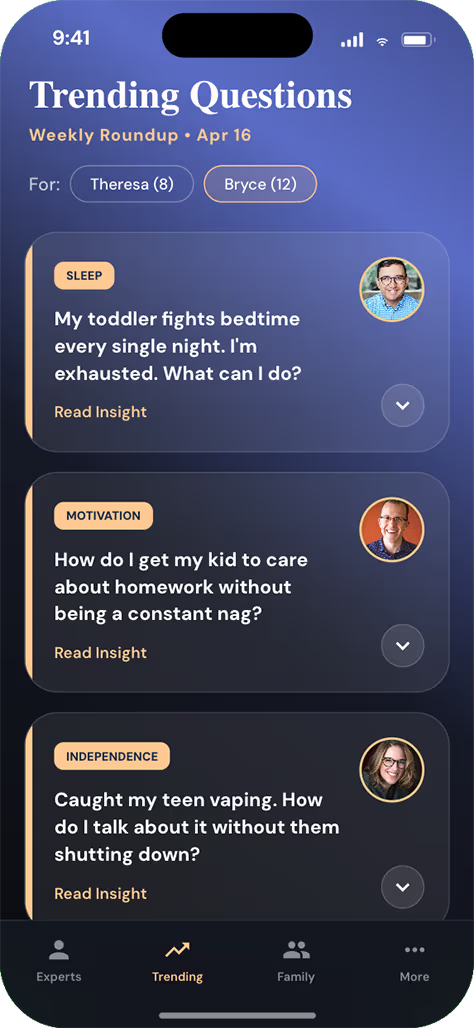


What if your partner goes in the moment the crying starts?
Try HumanUp free on iPhone or iPad. No credit card required.
HumanUp is currently available on iPhone and iPad. Join the Android waitlist for updates.
🔒 Your conversations are never read by a person · Built on trusted expert guidanceFrequently Asked Questions
Not really. Even gentle approaches usually involve some protest, because your child is getting used to a change. Going to your child right away every time keeps tears to a minimum while you build a calm, steady routine.
It's a common worry. Research has not found lasting emotional harm in children who are sleep trained. It is still hard for many parents to listen to, which is why so many look for a gradual approach. Both can be loving choices.
Most approaches take anywhere from a few days to a few weeks. Protest often gets louder at first, then starts to ease. Give your chosen approach about a week of steady effort before deciding it isn't working.
Talk it through and settle on one approach before the first night, ideally one you can both stick with when you're tired. If one of you goes in right away and the other waits, your child can get mixed messages, and the whole process can take longer.
Yes. If a method is overwhelming for you or your child, it's fine to change to a different one. Try to make the change once, on purpose, rather than switching from night to night.