
Your child's social reputation is being attacked by something you can't see, confront, or fact-check. The particular cruelty of rumors is that fighting them directly often amplifies them: the instinct to call the other child's parents, demand a meeting, or coach your child to 'set the record straight' can accelerate the very spread you're trying to stop.
Rumors aimed at a specific child are a form of relational aggression, and when they're targeted, repeated, and driven by social power, they fit the pattern researchers identify as bullying.
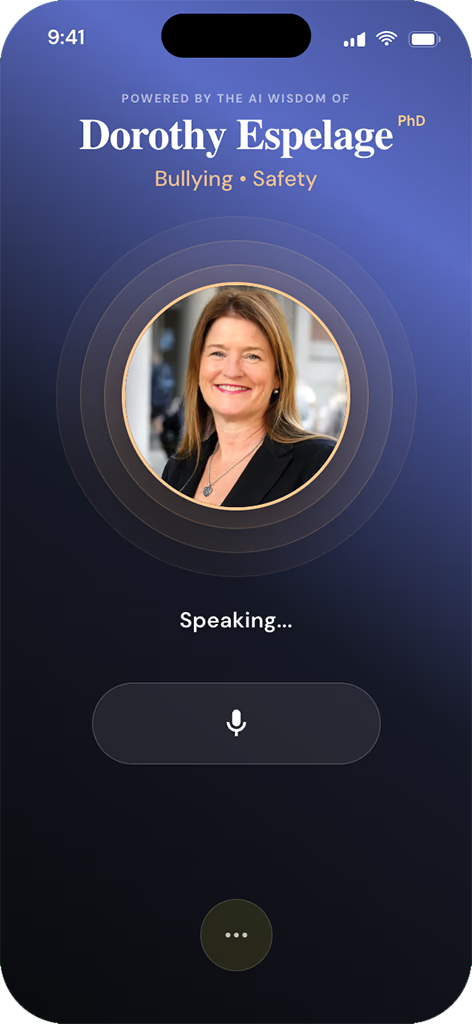
Rumors and gossip often arise from complex social interactions and can be a sign of underlying issues in peer dynamics. Dorothy Espelage's research indicates that these behaviors are a part of relational aggression, a form of bullying that can deeply affect a child’s self-esteem and social standing. Children may feel isolated or anxious, leading to decreased academic performance and emotional distress.
Developmentally, children are learning to understand social hierarchies and empathy. Rumors can be a misguided attempt at gaining social power or fitting in. It’s important for parents to recognize that these behaviors, while hurtful, are often a cry for connection and understanding. Encouraging open communication and emotional literacy can help children navigate these social challenges more effectively.
In elementary school (ages 8–10), rumors stay within small clusters and are usually about social exclusion: 'she said you can't sit with us.' By middle school (ages 11–13), rumors shift toward character and reputation, often sexualized or tied to social status, and spread across entire grades via group chats within hours.
High school rumors (ages 14–17) are harder to trace, more likely to involve identity or sexual content, and can persist in ways that affect college and social standing.
- Validate Their Feelings: "I can see this is really upsetting you, and it’s okay to feel that way."
If your child shuts down, try a calming activity together like drawing or a walk to create space for them to open up.
- Encourage Empathy: "Why do you think someone might say something like this? Could they be feeling something too?"
If they react defensively, revisit the conversation later when emotions have settled, emphasizing understanding over confrontation.
- Empower Their Response: "How would you like to handle this? I’m here to support you."
If they feel stuck, suggest role-playing different scenarios to build confidence in handling the situation.
Avoid saying, "Just ignore it, it will go away." This can invalidate their feelings and suggest passivity rather than proactive coping strategies. Another common misstep is, "Why didn’t you tell them it’s not true?" which might pressure the child to take actions they aren't ready for, increasing anxiety.
Escalation happens fastest when a rumor contains sexual content, when multiple peer groups are sharing it, or when the target reacts publicly: any emotional response gets amplified and recirculated. Parents frequently accelerate the damage by contacting the rumor-spreader's parents directly, which typically triggers defensiveness, counter-accusations, and a harder-to-defuse conflict between adults.
Telling your child to 'just ignore it' doesn't work: it asks them to absorb ongoing damage without any tools. The first concrete step: document everything in writing (screenshots, dates, names your child mentions), and make the first call to the school counselor rather than the other family.
The baseline guidance above is useful on its own. The details below can change where it makes sense to start, how much support to add, or when to involve someone else.
- How old is your child, and what developmental stage are they in?
- Is this one incident or a repeating pattern?
- Is one child involved, or a larger group?
- What does your child want from you right now: listening, advice, or action?
- Has there been a threat, harassment, physical harm, or another safety concern?
Frequently Asked Questions
Look for changes in your child's behavior such as withdrawal, reluctance to attend school, or unexplained mood swings. Open communication is key to understanding their emotional state.
Yes, if rumors are impacting your child's well-being, it’s important to involve teachers or counselors who can provide additional support and monitor the situation.
Encourage them to engage in activities that highlight their strengths, and provide positive reinforcement to help rebuild their self-esteem.