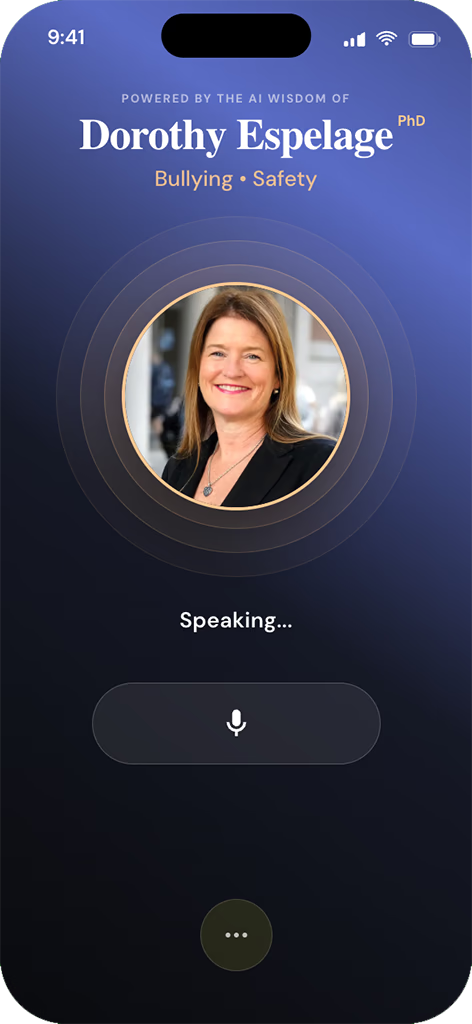

Watching your child be left out is one of the specific pains of parenting that doesn’t get easier with practice. Your instincts fire in all directions: fix it, explain it, call someone, make it stop. Most of those instincts, when followed, make things worse. Dorothy Espelage’s research on peer dynamics is built around a counterintuitive finding: what your child needs most in these moments isn’t a parent who solves the problem, but one who helps them understand it.
Cliques often form as children navigate social hierarchies, seeking a sense of identity and belonging. According to Dorothy Espelage's research, these behaviors can be pronounced in environments where children are learning to establish social dominance or coping with their own insecurities. This phase is a natural developmental stage where children explore group dynamics and learn about social roles through inclusion and exclusion.
Social exclusion often triggers strong emotional responses, as it touches on a child's core need for social acceptance. When excluded, children can feel a sense of shame or inadequacy, which might manifest as withdrawal or acting out. Understanding these drivers can help parents provide the right kind of support, reinforcing the child's self-esteem and resilience.
Social exclusion looks different across ages. At 7 or 8, friend groups are unstable and fluid: the same kids who excluded yours today will often be playing together by Friday. At 11 or 12, exclusion becomes more deliberate and status-related, tied to social hierarchy. By middle school it can be more targeted and intentional. The approach that helps a second-grader is different from what a sixth-grader actually needs.
- Empathy First: "It sounds like you felt really left out today. That's tough."
If your child dismisses this, consider asking about a time they felt included to shift focus.
- Normalize Feelings: "It's okay to feel sad about not being included. Everyone feels this way sometimes."
If they reject this, reassure them that their feelings are valid and they are not alone.
- Encourage Problem-Solving: "What do you think you could do next time to feel more included?"
If they can't think of anything, suggest specific actions like inviting a friend over.
Two phrases to avoid are "Just ignore them" and "You'll make new friends." Telling your child to ignore their peers can invalidate their feelings and make them feel unheard. Suggesting they'll make new friends might minimize the importance of their current social circle and make them feel misunderstood.
Your impulse: to call the other parent, email the teacher, or coach your child through exactly what to say next: comes from love. But the research Dorothy’s built her career on is consistent: children whose parents handle their social problems for them lose the belief that they can handle those problems themselves. Your job in these moments is to be the safe place, not the fixer. That’s harder, and it’s what actually helps.
The baseline guidance above is useful on its own. The details below can change where it makes sense to start, how much support to add, or when to involve someone else.
- How old is your child, and what developmental stage are they in?
- Is this one incident or a repeating pattern?
- Is one child involved, or a larger group?
- What does your child want from you right now: listening, advice, or action?
- Has there been a threat, harassment, physical harm, or another safety concern?
Once she’s settled enough to talk, here’s something worth knowing: social exclusion is almost never random. It’s almost always connected to group dynamics: someone jockeying for social position, someone projecting their own insecurities outward. That reframe doesn’t make it hurt less, but it does mean this isn’t about her being fundamentally unworthy of friendship.
One question worth asking her: is this a pattern with these friends, or did today feel different from usual? The answer changes what you do next.
Frequently Asked Questions
Look for signs such as reluctance to attend school, changes in mood, or withdrawal from social activities. Open, non-judgmental conversations can also help reveal if exclusion is happening.
Encourage empathy by discussing the impact exclusion has on others and promote inclusivity by modeling inclusive behavior at home.
Request a meeting to discuss your observations and concerns, focusing on collaboration to create a supportive environment for your child at school.