
Watching a close friendship fracture, especially one that's been a constant in your child's life, is genuinely painful, and the urge to call the other parent, step in, or engineer a reconciliation is nearly automatic.
Here's the distinction that changes the entire approach: a falling out between two children of roughly equal standing is peer conflict, not bullying, and peer conflict is one of the primary ways children develop the social skills they'll carry into adult relationships. That doesn't make it hurt less: it means the goal is fundamentally different.
The move that most reliably worsens a friend conflict: one parent calling the other. Even with the best intentions, it transfers the conflict into adult territory, embarrasses most children, and rarely produces the outcome either family wants.
The second most common misstep is validating everything the child reports at face value: children naturally omit their own role in escalations, not out of deception but because their own contribution isn't visible to them. Before offering any strategy at all, ask one question: what does your child actually want to happen? Reconciliation, distance, and a conversation for closure each require completely different approaches.
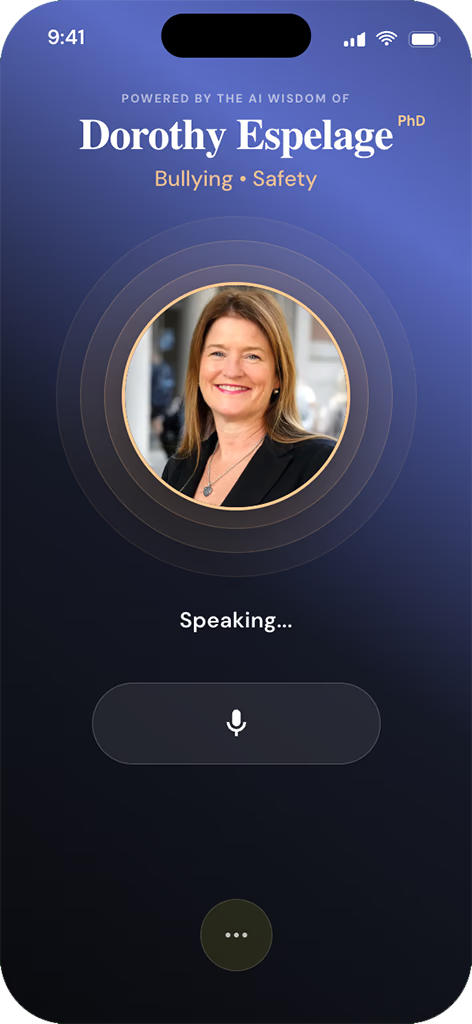
According to insights inspired by Dorothy Espelage, many conflicts arise because children are still developing empathy and perspective-taking skills. They might struggle with seeing things from another's point of view, which can lead to misinterpretations and disagreements. Recognizing these developmental stages can help parents guide their children toward effective conflict resolution.
- Encourage Empathy: "How do you think your friend felt when that happened?"
If your child struggles to answer, try gently prompting them with examples from their own experiences to foster understanding.
- Promote Perspective-Taking: "What do you think your friend was thinking when it happened?"
If your child is resistant, you can role-play the situation to help them see different viewpoints.
- Guide Problem-Solving: "What could you do differently next time to make things better?"
If they're unsure, brainstorm options together to empower them with strategies for future conflicts.
Avoid saying "Just ignore them," as this can dismiss your child's feelings and discourage them from addressing the issue. This might lead to unresolved feelings and recurring conflicts.
Steer clear of "You need to apologize right now," without helping them understand why. Forced apologies can feel insincere and may not resolve the underlying issues, potentially leading to resentment.
It's natural to feel frustrated or anxious when your child is in conflict. One way to manage these feelings is to remind yourself that conflicts are growth opportunities. Take deep breaths and focus on being a supportive guide rather than jumping in to fix the problem immediately. This perspective can help reduce your own stress and model calm conflict resolution for your child.
The baseline guidance above is useful on its own. The details below can change where it makes sense to start, how much support to add, or when to involve someone else.
- How old is your child, and what developmental stage are they in?
- Is this one incident or a repeating pattern?
- Is one child involved, or a larger group?
- What does your child want from you right now: listening, advice, or action?
- Has there been a threat, harassment, physical harm, or another safety concern?
Frequently Asked Questions
Start by listening to your child's perspective without judgment. Validate their feelings and encourage them to express what they think happened in the conflict.
Model effective communication and problem-solving skills at home. Role-playing different scenarios can also prepare them to handle conflicts on their own.
If bullying is involved, it's important to take it seriously. Communicate with your child's school and help your child feel safe and supported while addressing the issue with appropriate authorities.