
Online harassment eliminates the one protection that existed before smartphones: the school day ended and the child went home. Now the aggression follows your child into their bedroom at midnight, with a visible audience they can count.
The first instinct for most parents is to take the device, and the research is consistent that this backfires, because removing the phone cuts your child off from their entire social world while leaving the harassment running without them there to monitor or document it.
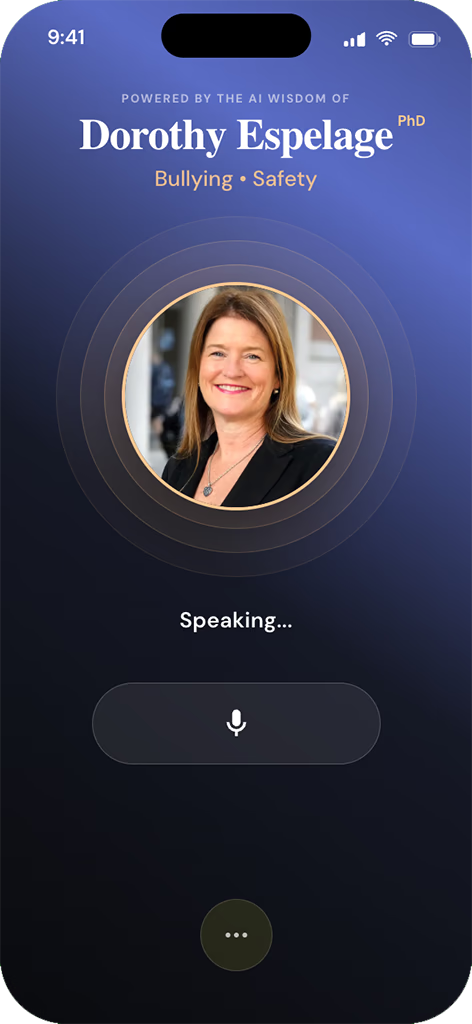
Online harassment among teens often arises from complex social dynamics and power imbalances. As Dorothy Espelage's research highlights, adolescents are navigating a world where social hierarchies are formed and reinforced in virtual spaces, often mirroring real-world dynamics. The anonymity and reach of the internet can exacerbate these issues, making it easier for bullies to target others without immediate consequences.
Moreover, the developmental stage of adolescence is marked by a heightened sensitivity to peer perceptions and social status. Teens are in a phase where identity formation is critical, and online interactions play a significant role in this process. Unfortunately, this can make them more vulnerable to harassment, as they may be seeking validation and acceptance in these virtual environments.
In late elementary school (ages 9–11), online harassment most often occurs in gaming environments: Roblox, Minecraft servers, and typically involves children they already know from school. The damage is highest in middle school (ages 11–13), when social identity is still forming, belonging is fragile, and a single group chat can shift a child's entire social standing within 24 hours.
High school harassment (ages 14–17) more often involves coordinated pile-ons, sexualized content, or anonymous accounts, and the reputational stakes are significantly higher.
- Validate Feelings: "I can see this is really upsetting, and that’s completely understandable. You’re not alone in this."
Fallback Plan: If they dismiss your concern, gently remind them that you're there whenever they feel ready to talk.
- Empower Their Voice: "What do you think would help in this situation? Let’s brainstorm some ideas together."
Fallback Plan: If they seem defeated, suggest a small action they can take, like blocking the harasser, to regain some control.
- Highlight Support Networks: "Let’s think about who else can support us, whether it’s a teacher or a friend."
Fallback Plan: If they’re hesitant, suggest reaching out to a trusted adult or peer on their behalf.
Avoid saying "Just ignore it," as this can make your teen feel their concerns are trivialized and that they should quietly endure the harassment. This dismisses their valid emotions and the real impact of the online interactions.
Refrain from asking "Why did you let this happen?" This can inadvertently place blame on your teen and exacerbate feelings of guilt or shame, further isolating them from seeking your help.
Anonymous harassment escalates anxiety dramatically because threat assessment is impossible when the source is unknown. Group chats or accounts the child knows exist but can't access, where they sense something is circulating without being able to see it, are particularly destabilizing. The most common parent action that backfires: deleting the evidence or accounts before documenting, because screenshots are the foundation of any school or platform response.
Concrete protocol: screenshot everything first, note dates and usernames, then report to the platform, and separately, bring that documentation to the school counselor if the harasser is a classmate, because online behavior between students is a school climate issue, not just a digital one.
The baseline guidance above is useful on its own. The details below can change where it makes sense to start, how much support to add, or when to involve someone else.
- How old is your child, and what developmental stage are they in?
- Which device, app, game, or online situation is creating the most friction?
- What is being displaced, such as sleep, schoolwork, movement, or family time?
- What limits or agreements are already in place, and where do they break down?
- How does your child respond when you raise the issue or end access?
Frequently Asked Questions
Look for changes in behavior such as withdrawal, anxiety about going online, or sudden shifts in mood after using their device.
Encourage them to document the harassment, block the harasser, and report the behavior to the platform or authorities if necessary.
Focus on open-ended questions that invite discussion, and emphasize empowerment and proactive steps over fear-based messages.