

The sweets rules made sense when you set them up, but somewhere along the way, candy became the most valuable currency in the house. Every dessert is negotiated. Every birthday party involves a conversation on the way home. Your child talks about sugar the way other kids talk about screen time, like it's the thing they're always angling toward, and the restrictions that were supposed to limit that fixation seem to be feeding it instead.
Many children are drawn to sweet flavors, and sweets are everywhere: at birthday parties, after games, at holidays and in many packaged foods. That makes them hard to avoid, and it's why a calm, steady approach at home matters.
Sweets are also often used as a reward. That can put them on a pedestal and send the message that some foods are worth more than others, so the rest of the meal becomes the price of getting dessert.
In the toddler and preschool years, a strong liking for sweet things is common and not a sign of bad eating habits.
Strict rules can backfire, because the more off-limits a food is, the more children tend to want it. Older kids are often handling sweets on their own at school, at friends' houses and at activities, so practicing balance at home matters more than strict rules.
- Empathize and Hold Steady: "I see you really want that candy. It's not candy time now. There will be a little dessert with dinner." If your child insists, stay calm and kind, and move on to something else together.
- Involve Them in Choice: "Would you like to choose a sweet snack for tomorrow's lunch? Let's plan it together."
If they resist, suggest a fun cooking activity to make a healthier treat.
- Make Sweets Ordinary: "There's a small dessert on your plate with dinner tonight." If your child asks for more, say kindly, "That's tonight's amount," and keep the conversation going.
Avoid saying, "If you eat your veggies, you can have dessert." This can create a negative view of healthy foods as obstacles to be overcome. Instead, present all foods as enjoyable in their own right.
Another pitfall is saying, "You can't have that, it's bad for you." Labeling foods as 'bad' can lead to feelings of guilt and increased desire. Instead, keep food talk neutral. All foods can be enjoyed, and on most days fruits, vegetables and other foods fill more of the plate than sweets.
The fixation intensifies when dessert becomes the prize that makes dinner worth finishing: when 'eat your vegetables and you can have dessert' frames sweets as the only thing at the table actually worth wanting. That structure inadvertently devalues everything served before dessert and signals that sweets occupy a category above regular food.
One thing to try: serve a small sweet with dinner instead of after it. That takes away the reward and shows your child that sweets are a normal food in a small amount, while most of the plate is everything else.
Treating sweets as a normal food, in small amounts, is the thread through it all. Putting that into practice starts with an honest look at where and when sugar shows up in your child's week.
- At home, are sweets off-limits, saved for special days, or a small part of most days?
- Does most of the sugar come from home, or from school, sports and friends' houses?
- Is your child drinking juice, soda or sweetened milk during the day?
- Do sweets ever get used as a reward, or to comfort a hard day?
- Is your child old enough to buy or get sweets without you there?
Talk it through with Nimali Fernando's guidance
Bring the last candy standoff, whether it was at the checkout, a party or your own kitchen. Talking it through helps you settle on sweets rules you can keep, what to say when the begging starts and what to try if things get louder before they settle, built on Nimali Fernando's authorized content.
- “My 5-year-old begs for candy at every store checkout. How do I handle it?”
- “We let him keep his Halloween candy and now he asks for it at every meal. What now?”
- “My 3-year-old melts down when the birthday cake is gone. What do I say in the moment?”
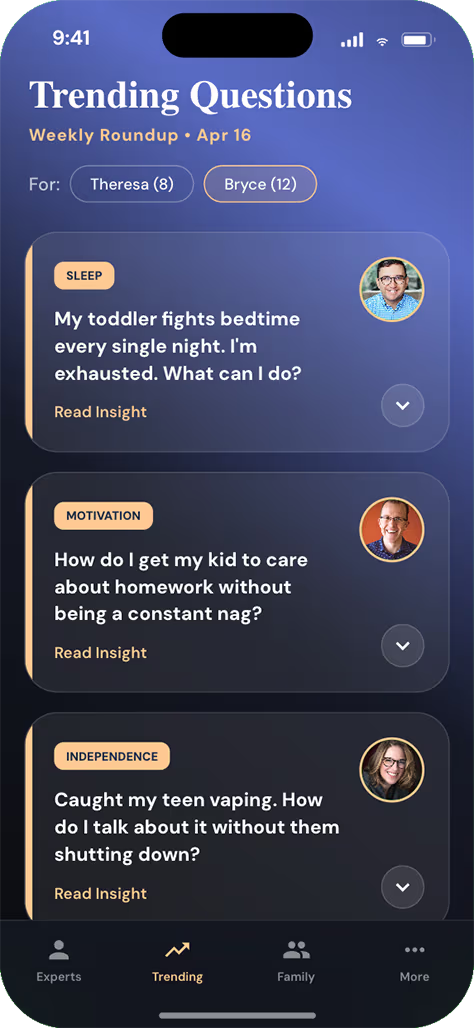


What if your child's coach hands out candy after every game?
Try HumanUp free on iPhone or iPad. No credit card required.
HumanUp is currently available on iPhone and iPad. Join the Android waitlist for updates.
🔒 Your conversations are never read by a person · Built on trusted expert guidanceFrequently Asked Questions
Introduce limits gradually and explain the benefits of variety in a child's diet. Use positive language to frame healthier choices.
Incorporate healthy foods creatively, like a colorful fruit plate or a smoothie, to make them more appealing.
It's better to avoid using food as a reward. Instead, focus on non-food rewards to reinforce positive behaviors.