

You've tried the strategies. You've hidden vegetables in smoothies, offered tiny portions alongside the safe foods, turned broccoli into 'little trees,' served the same new food a dozen times in a row. And the list of what your child will eat is exactly the same as it was a year ago.
That doesn't mean you're doing it wrong. Learning to like a new food takes a lot of practice, and pushing tends to add worry without adding progress.
When it comes to new tastes, it helps to think about the whole experience, not just the flavor. Many children are wary of anything unfamiliar, and a new food can look, smell and feel strange before it ever reaches their mouth. The trick is to make the food familiar without overwhelming them.
Some children need to get to know a food with their other senses first: looking at it, touching it, smelling it and talking about how it feels. A small practice taste can come later, once the food feels familiar. Over time, steady, low-pressure practice helps children become more adventurous eaters.
With toddlers, a new food's look or feel alone can be enough for them to refuse it before it reaches their mouth. A little later, refusal often turns into a quick 'I don't like that,' sometimes before the food has been tasted at all.
As they get older, children can usually say what bothers them, like the color, the smell or the way it touches another food, and those details give you clues about how to serve it next time.
- Link to the Familiar: "This carrot is like the sweet potato you liked last week!"
If they reject the comparison, offer the new food alongside a favorite dish without forcing it.
- Introduce Playful Themes: "Let's be taste explorers today!"
If they refuse, turn the focus to the color or shape of the food to spark interest without pressure.
- Encourage Curiosity: "What do you think this will taste like? Let's find out together!"
If they shy away, gently remind them that exploring is about learning, not liking everything immediately.
Avoid saying, "Just try it, you'll like it," as this places pressure on the child and sets expectations that might not be met, leading to disappointment. Instead, focus on exploring the food without the promise of enjoyment.
Another common phrase is, "If you don't eat this, you won't get dessert." This turns food into a power struggle, associating healthy eating with punishment rather than pleasure. Instead, cheer small steps like touching or smelling the food, without offering dessert or toys as a reward.
The classic escalation: parent offers new food, child rejects it, parent encourages, child holds position, parent escalates to 'just one bite,' child resists harder. Pressure can make the food feel like a threat, and now the food itself carries the memory of a conflict.
What helps is a calmer plate. Put a small amount of the new food on the plate, next to a food your child sometimes likes, eat some yourself, and keep the conversation on other things. A small practice taste can come later, kept low-key, once the food feels familiar.
Repeated, pressure-free exposure gives a child room to warm up to an unfamiliar food. Small steps work best, and the right one starts from wherever your child is with it today.
- Right now, will your child touch or smell a new food, or not let it near their plate?
- Is it the taste that seems too strong, or how the food looks and feels?
- Has this food been offered just a few times, or many times in different forms?
- Is there a food your child already likes that this one could be compared or paired with?
- Does the new food go on the plate as a single bite, or as a regular serving?
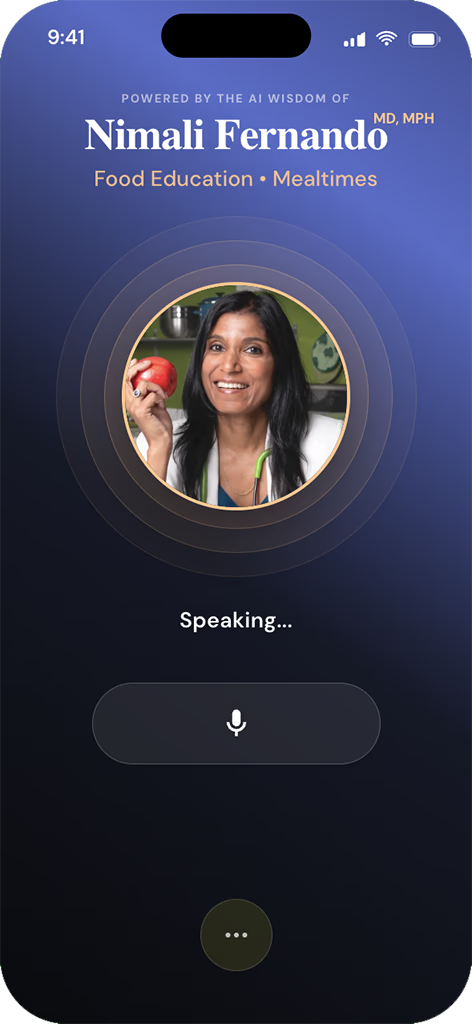
Talk it through with Nimali Fernando's guidance
Name the one food you'd most like your child to try. With guidance grounded in Nimali Fernando's authorized content, you can plan the next few tries, decide what to say when it's pushed away and change course if the same food keeps coming back untouched.
- “We're cooking dishes from my family's culture and my 8-year-old says they smell weird. How do I make it less of a fight?”
- “We've offered broccoli fifteen times and she still won't touch it. Should we keep going?”
- “My 5-year-old licks a new food and then spits it out. What do I say when that happens?”

What if a relative keeps pushing "just one bite" at family dinners?
Try HumanUp free on iPhone or iPad. No credit card required.
HumanUp is currently available on iPhone and iPad. Join the Android waitlist for updates.
🔒 Your conversations are never read by a person · Built on trusted expert guidanceFrequently Asked Questions
It can take 10 to 15 tries, and sometimes more, before a child learns to like a new food. Keep offering it in small amounts, without pressure, and try cooking it in different ways.
Start by offering new foods alongside known favorites and focus on textures and colors to gradually build interest without pressure.
While sneaking foods in might provide nutrients, it's essential to also offer these foods visibly to build recognition and acceptance over time.